|
|
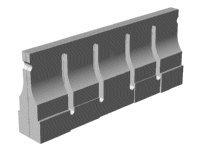
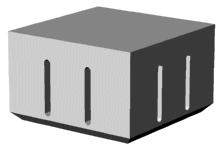
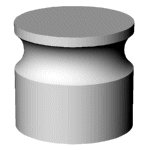
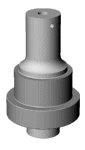
 | Industrial resonators shows typical
horns, boosters, and transducers. These resonators deliver high energy density in order to
substantially affect the materials with which they are in contact. Common uses
include welding plastics and nonferrous metals, cutting, abrasive machining of hard
materials, fatigue testing, atomization, defoaming, cleaning, liquid processing,
sonochemistry (enhancement of chemical reactions), and deagglomeration.
If you are interested in a specific design, then select from the following for detailed
information. (Note: many additional resonators are available at the above link.)
|
| Medical resonators are used for cutting,
disintegrating, cauterizing, scraping, cavitating, and dental descaling.
|
| FEA Information "Ultrasonic
Resonator Design Using Finite Element Analysis (FEA)" discusses the advantages and
limitations of finite element analysis for resonator design. This paper was
originally presented at the Ultrasonic
Industry Association's 1991 technical symposium. It has been updated to reflect
current practices.
|
| Resonator Information Form If you have a resonator
design that might be improved by finite element analysis, then you can use this form to
submit baseline information. |
|
|
|